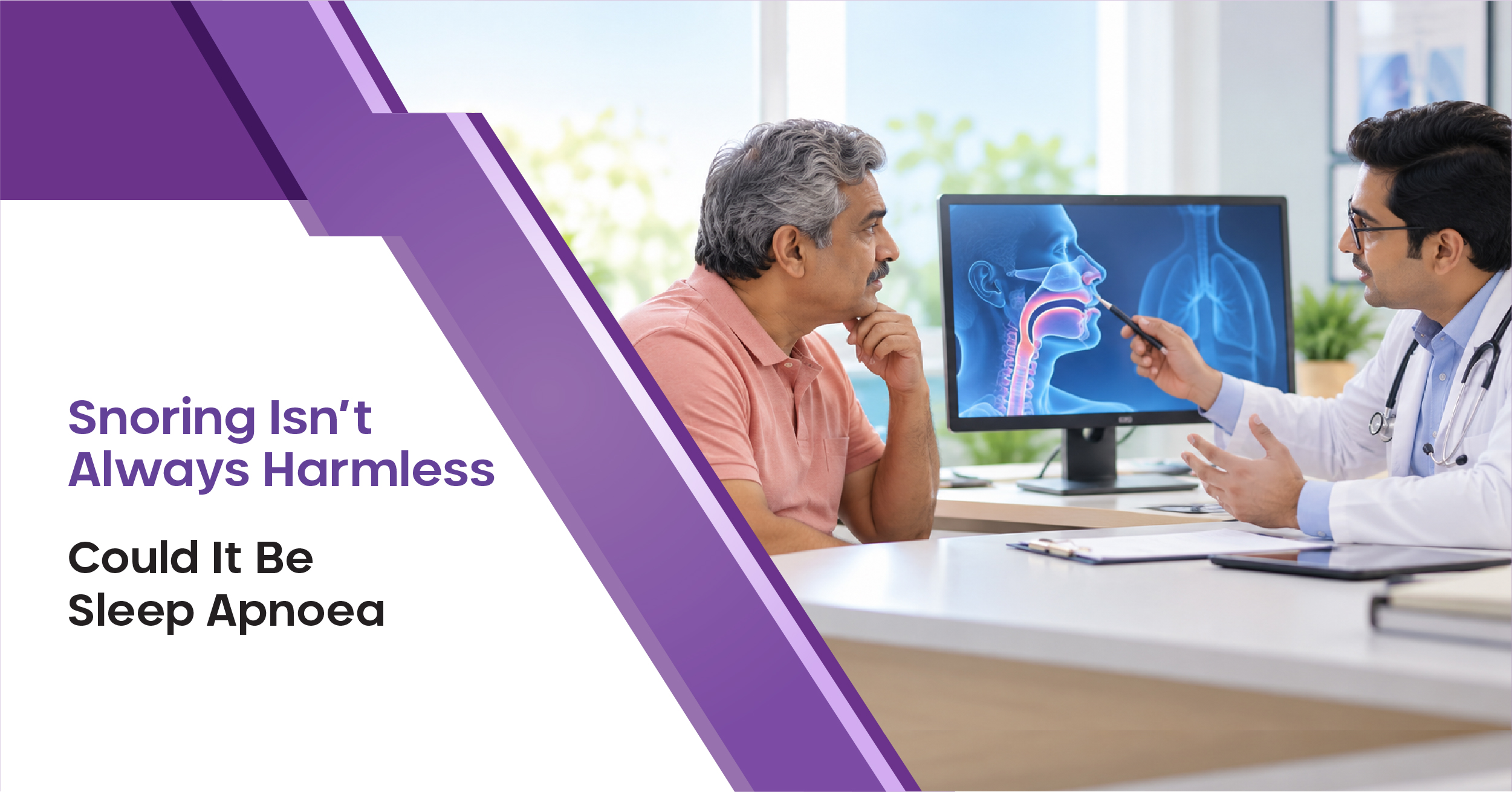
Snoring is common and is often dismissed as a harmless nighttime habit. But loud, persistent snoring, especially when accompanied by pauses in breathing, gasping or excessive daytime sleepiness, can sometimes be a sign of sleep apnoea.
Sleep apnoea is a sleep disorder in which breathing repeatedly stops and starts during sleep. If left untreated, it can affect sleep quality, concentration and overall health. Understanding the symptoms and seeking timely medical evaluation can help prevent complications.
What Is Sleep Apnoea?
Sleep apnoea occurs when a person’s breathing is repeatedly interrupted during sleep.
The most common type is obstructive sleep apnoea (OSA), which happens when the muscles in the throat relax and temporarily block the upper airway. Less commonly, central sleep apnoea occurs when the brain does not send the appropriate signals to the muscles responsible for breathing.
These repeated interruptions can reduce oxygen levels and cause the person to briefly wake up, often without being aware of it.
Is Snoring Always a Sign of Sleep Apnoea?
No. Not everyone who snores has sleep apnoea.
However, certain patterns of snoring may warrant medical evaluation. Loud and frequent snoring accompanied by pauses in breathing, choking or gasping during sleep can be a warning sign.
Other symptoms may include:
- Excessive daytime sleepiness
- Morning headaches
- Difficulty concentrating
- Irritability or mood changes
- Dry mouth after waking
- Waking up frequently during the night
- Feeling tired despite getting enough time in bed
If these symptoms are present, consulting a Pulmonologist in Coimbatore can help determine whether an underlying sleep-related breathing disorder may be involved.
For more information about the connection between snoring and sleep quality, you can also read How Does Snoring Impact the Quality of Your Sleep?.
Who Is More Likely to Develop Sleep Apnoea?
Sleep apnoea can affect people of different ages and body types, although certain factors can increase the risk.
These include:
- Overweight or obesity
- Increasing age
- A narrow upper airway
- Enlarged tonsils or certain facial or jaw characteristics
- Family history of sleep apnoea
- Alcohol consumption
- Smoking
- Certain medical conditions
Menopause can also increase the risk of obstructive sleep apnoea in women.
Having one or more risk factors does not necessarily mean that someone has sleep apnoea. A proper assessment is needed to confirm the condition.
How Can Sleep Apnoea Affect Your Health?
Poor sleep is not the only concern. Repeated interruptions in breathing can place stress on the cardiovascular system and may be associated with conditions such as high blood pressure, heart disease and stroke. Untreated sleep apnoea can also contribute to daytime sleepiness, increasing the risk of accidents, particularly while driving.
This is why persistent symptoms should not simply be attributed to poor sleep or a busy lifestyle.
You can also read How to Overcome the Common Sleep Disorders? for additional information about common sleep disorders, including sleep apnoea.
How Is Sleep Apnoea Diagnosed?
A doctor may begin by discussing your sleeping habits, symptoms, medical history and risk factors. In many cases, a sleep study is used to confirm the diagnosis.
A sleep study, also known as polysomnography, monitors several body functions while you sleep, including breathing, oxygen levels, heart rate and brain activity. Some patients may be suitable for a home sleep apnoea test depending on their symptoms and clinical assessment.
A Sleep Specialist in Coimbatore can determine which type of evaluation is appropriate based on the individual’s symptoms and risk factors.
What Are the Treatment Options?
Sleep Disorder Treatment in Coimbatore depends on the type and severity of sleep apnoea and the individual’s overall health.
Treatment may include:
- Weight management where appropriate
- Regular physical activity
- Avoiding alcohol and sedatives before bedtime when advised
- Positional therapy for selected patients
- Continuous positive airway pressure (CPAP)
- Oral appliances for suitable patients
- Treatment of underlying nasal or airway problems
- Surgery in selected cases
CPAP is a commonly used treatment for obstructive sleep apnoea. It uses gentle air pressure delivered through a mask to help keep the airway open during sleep.
Treatment should be selected based on medical assessment rather than simply purchasing or using a device without proper diagnosis.
For further information about sleep-related breathing concerns, How Does Snoring Affect Sinus Health? discusses factors that can contribute to snoring and breathing difficulties during sleep.
When Should You See a Doctor?
You should consider medical evaluation if you or your family members notice:
- Loud, regular snoring
- Repeated pauses in breathing during sleep
- Gasping or choking at night
- Excessive daytime sleepiness
- Morning headaches
- Difficulty concentrating
- Persistent tiredness despite adequate sleep
If you frequently feel sleepy during the day or have unintentionally fallen asleep while driving or performing routine activities, seek medical advice promptly.
How Sri Ramakrishna Hospital Can Help
Sri Ramakrishna Hospital provides specialist medical care for patients experiencing respiratory and sleep-related concerns.
For individuals seeking Sleep Apnoea Treatment in Coimbatore, the first step is an appropriate clinical assessment to understand the symptoms and determine whether sleep apnoea or another sleep disorder may be responsible.
A Pulmonologist in Coimbatore can evaluate breathing-related symptoms and recommend appropriate investigations when sleep apnoea is suspected. Patients may also be referred for a sleep assessment based on their clinical presentation.
With access to specialist evaluation and diagnostic support, patients looking for Sleep Disorder Treatment in Coimbatore can receive a treatment plan based on the underlying condition rather than treating snoring alone.
The Pulmonology Department at Sri Ramakrishna Hospital provides respiratory and sleep-related care, including access to sleep testing for suspected sleep-related breathing disorders.
Why Timely Treatment Matters
Sleep apnoea is manageable, but leaving it untreated can affect both sleep and long-term health.
Recognising the warning signs early, undergoing appropriate testing and following a personalised treatment plan can help improve sleep quality and daytime alertness while reducing the health risks associated with untreated sleep apnoea.
If persistent snoring is accompanied by pauses in breathing, gasping or excessive daytime sleepiness, speak to a Sleep Specialist in Coimbatore instead of assuming it is simply normal snoring.
For additional information about daytime sleepiness and when it may require medical attention, see Is Daytime Sleepiness a Sign of a Health Issue?.
Final Thoughts
Snoring may be harmless in some people, but loud and persistent snoring combined with breathing interruptions should not be ignored.
If you suspect sleep apnoea, timely evaluation can help identify the cause and determine the right treatment. With appropriate diagnosis and care, Sleep Apnoea Treatment in Coimbatore can help patients breathe better during sleep, improve daytime functioning and protect their long-term health.