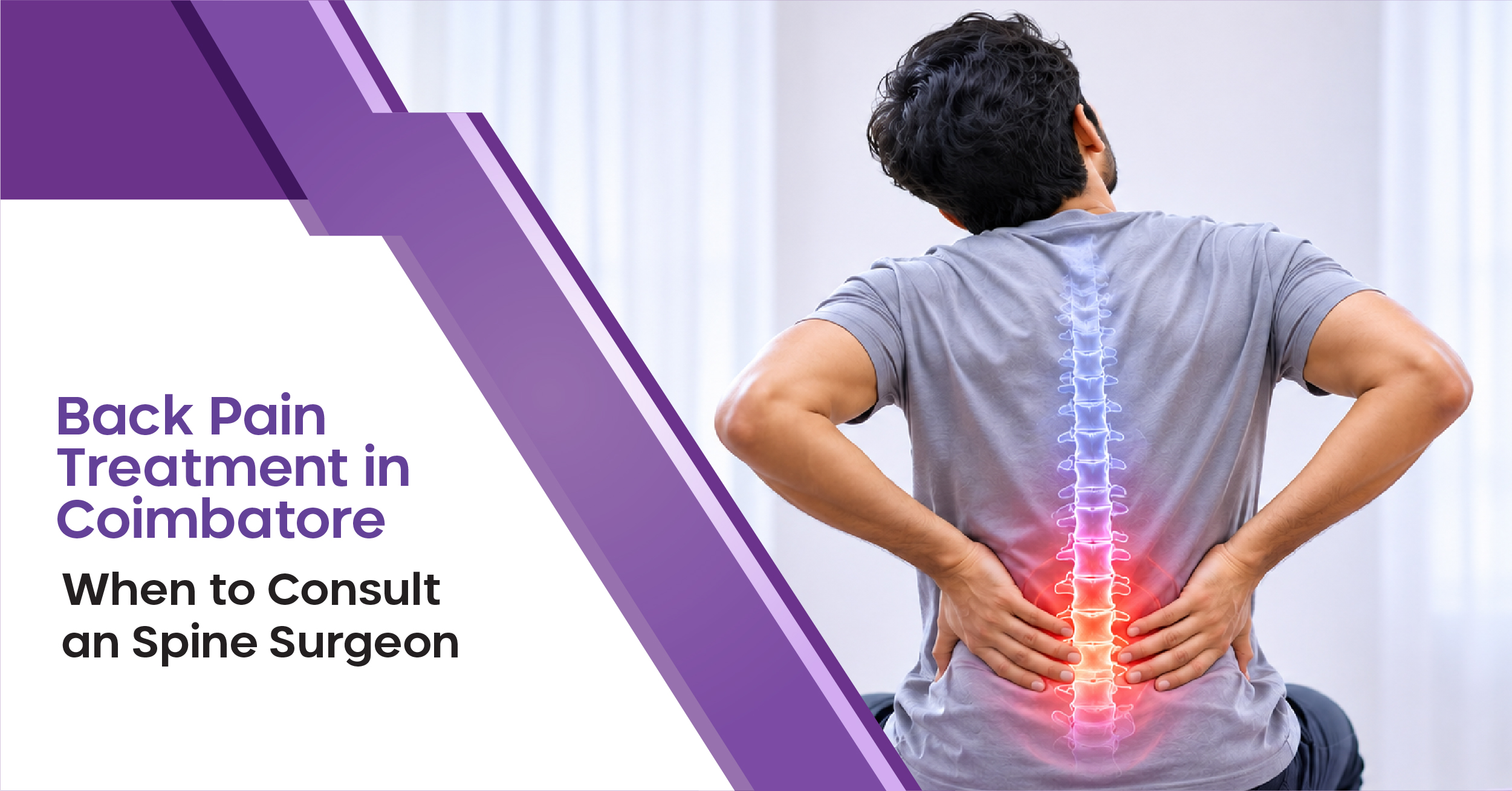
Back pain is one of the most common musculoskeletal problems and can affect people of almost any age. It may develop after lifting something heavy, prolonged sitting, an injury, muscle strain or changes affecting the spine. While many episodes improve with time and appropriate activity, persistent or severe pain not allowing to do daily activities of living may need medical evaluation.
Understanding common lower back pain causes can help you recognise when symptoms may need professional attention. The right treatment depends on what is causing the pain, how long it has been present and whether other symptoms are occurring alongside it.
What causes back pain?
Back pain can have many possible causes. In many people, no specific structural cause can be identified, and the pain is described as non-specific low back pain. Muscle or ligament strain is another common cause, particularly after unusual physical activity.
Other conditions can include:
- Herniated or bulging discs
- Sciatica or nerve irritation
- Spinal stenosis
- Arthritis affecting the spine
- Vertebral fractures
- Scoliosis or other spinal abnormalities
- Certain infections or inflammatory conditions
- Spine and spinal cord tumors
Age, reduced physical activity, obesity, smoking and physically demanding work can increase the risk of some forms of low back pain. However, the presence of a risk factor does not mean that it is necessarily the cause of an individual’s symptoms.
Types of back pain
- Acute back pain – less than 6 weeks.
- Subacute back pain – 6–12 weeks.
- Chronic back pain – more than 12 weeks.
- Mechanical back pain.
- Radicular pain (sciatica).
What symptoms can occur with back pain?
Back pain may feel like an ache, stiffness, burning sensation or sharp pain. Some people experience pain that travels from the lower back into the buttock or leg, which may occur when a spinal nerve is irritated.
Numbness, tingling or weakness in a limb can also occur with some nerve-related conditions. Symptoms can vary significantly depending on the underlying cause, so persistent symptoms should be evaluated rather than self-diagnosed.
Back pain can also interfere with sleep, movement, work and other daily activities. If symptoms continue or repeatedly return, a clinical assessment can help determine the appropriate next step.
| Condition | Typical presentation |
| Lumbar disc prolapse/ Sciatica | Back pain with shooting pain to the leg |
| Spinal stenosis | Leg pain or heaviness while walking |
| Spondylolisthesis | Back pain, sometimes with nerve compression causing pain to the leg |
| Vertebral fracture | Sudden back pain, especially in osteoporosis |
| Degenerative disc disease | Recurrent or chronic back pain |
When should you consult an Spine Surgeon?
Not every episode of back pain requires an spine surgeon consultation. Many short-term episodes improve within a few weeks with appropriate activity, exercise and self-care.
Consider seeing a doctor if:
- Pain continues for several weeks
- Symptoms repeatedly return
- Pain interferes with normal activities or sleep
- Pain travels into the leg or arm
- You develop numbness, tingling or weakness
- Symptoms began after an injury
- Pain is becoming progressively worse
Spine specialist recommends medical assessment when back pain does not improve after a few weeks, interferes with everyday activities or is accompanied by symptoms such as unexplained weight loss or worsening night pain.
When is back pain an emergency?
Certain symptoms require immediate medical attention. Seek emergency care if back pain is accompanied by new problems controlling your bladder or bowel, numbness around the genitals or anus, or significant weakness or numbness affecting both legs.
Back pain following a serious accident should also be assessed urgently. Severe pain that develops suddenly and rapidly worsens, particularly with fever or feeling generally unwell, also warrants prompt medical evaluation.
These symptoms can sometimes indicate serious conditions involving the spinal nerves or other structures. They should not be managed at home without medical assessment.
How is back pain diagnosed?
A doctor will usually begin by asking about the location, duration and nature of your pain. Your medical history, previous injuries, occupation, activity levels and associated symptoms may also be discussed.
A physical examination may assess movement, muscle strength, reflexes and sensation. Imaging such as an X-ray or MRI is not necessary for every episode of back pain. It may be recommended when the clinical assessment suggests a specific spinal problem or when symptoms persist or require further investigation.
The aim is to identify whether the pain is likely to be non-specific or whether there is an underlying condition requiring targeted treatment.
When an MRI of the spine will be suggested?
- Persistent symptoms despite appropriate conservative treatment.
- Progressive neurological weakness.
- Suspected disc prolapse with nerve compression.
- Suspected spinal infection, tumour or fracture.
- when cauda equina syndrome is suspected
What are the treatment options?
Treatment depends on the cause and severity of the symptoms. For many cases of nonspecific low back pain, staying physically active, exercise, rehabilitation and education are important components of care. Prolonged bed rest is generally not recommended.
For chronic primary low back pain supports non-surgical approaches recommended are structured education, exercise and selected physical therapies, with treatment tailored to the individual’s needs.
Medication may be used when appropriate, but the choice should consider a person’s medical history and other medicines. Physiotherapy can help improve strength, mobility and function.
Sri Ramakrishna Hospital’s dedicated back pain treatment services describe a multidisciplinary approach involving pain management, medical, surgical and rehabilitation expertise including
- Physiotherapy and structured rehabilitation.
- Core muscle strengthening.
- Medication and pain management.
- Epidural steroid injections for selected patients.
- Radiofrequency procedures for selected chronic pain conditions.
- Endoscopic discectomy.
- Minimally invasive spine surgery.
- Spinal decompression and fusion when indicated.
When might surgery be considered?
Most back pain does not require surgery. Surgical treatment may be considered for selected structural problems, particularly when symptoms are severe, persistent or associated with significant nerve compression and appropriate non-surgical treatment has not provided adequate improvement.
Procedures vary according to the underlying condition. For example, a herniated disc causing significant nerve compression may sometimes require discectomy, using advanced technology such as Endoscopy / Minimally Invasive Spine Surgery techniques. For potentially faster recovery, consider minimally invasive spine surgery if your spine surgeon recommends it for your condition.
Sri Ramakrishna Hospital provides information about spine surgery in Coimbatore and describes lumbar spine procedures for selected patients.
What is endoscopic spine surgery?
Endoscopic spine surgery is a minimally invasive technique used to treat selected spinal conditions, particularly certain types of disc prolapse and nerve compression.
The procedure uses a small incision and an endoscope equipped with a camera and specialised instruments to visualise and treat the affected area.
Potential advantages in appropriately selected patients include:
- Smaller surgical incision.
- Less disruption to surrounding tissues.
- Reduced blood loss in many cases.
- Potentially shorter hospital stay.
- Earlier mobilisation in suitable patients.
However, endoscopic surgery is not appropriate for every spinal condition. The decision should be made by an experienced spine surgeon after reviewing the patient’s symptoms, examination and imaging.
Types of Endoscopic spine surgery
- Foraminoscopy
- Interlaminar endoscopy
- UBE
- Tubular Endoscopy
Appropriate technology and approach is selected by the Neurospinal surgeon to protect the neural elements and decompress the spine and nervous tissue to achieve the end result of improvement and pain relief.
How can you protect your spine?
Everyday habits can influence back health. Maintaining regular physical activity, taking breaks from prolonged sitting, using appropriate workplace ergonomics and maintaining a healthy weight can support overall musculoskeletal health.
Strengthening the muscles around the abdomen and back may also help improve physical function. However, exercises should be appropriate for your condition, particularly if you already have significant pain or neurological symptoms.
Sri Ramakrishna Hospital’s article on spine health discusses practical habits such as taking breaks from prolonged sitting, maintaining posture and incorporating regular movement.
Back pain care at Sri Ramakrishna Hospital, Coimbatore
Sri Ramakrishna Hospital provides orthopaedic and pain management services for patients with musculoskeletal and chronic pain conditions.
The hospital’s Interventional Pain Medicine Department describes a multidisciplinary approach involving surgical, medical and rehabilitation departments for chronic pain management.
For someone looking for a back pain hospital in Coimbatore, it is useful to consider whether the facility can provide appropriate diagnosis, non-surgical management, pain management, rehabilitation and specialist spinal care when required.
A spine specialist in Coimbatore can assess persistent or complex symptoms and help determine whether conservative treatment, further investigation or a procedure is appropriate.
Final thoughts
Back pain can have many causes, and treatment should be based on an appropriate clinical assessment rather than assuming that every case involves a disc problem or requires surgery. Many people improve with activity, exercise, rehabilitation and other non-surgical approaches.
If pain persists, interferes with daily activities, radiates into a limb or is accompanied by numbness or weakness, consult a qualified healthcare professional. If you develop bladder or bowel changes, numbness around the genital area or significant weakness in both legs, seek emergency medical care immediately.
For people seeking back pain treatment in Coimbatore, early assessment can help identify the likely cause and guide you towards the most appropriate treatment pathway.