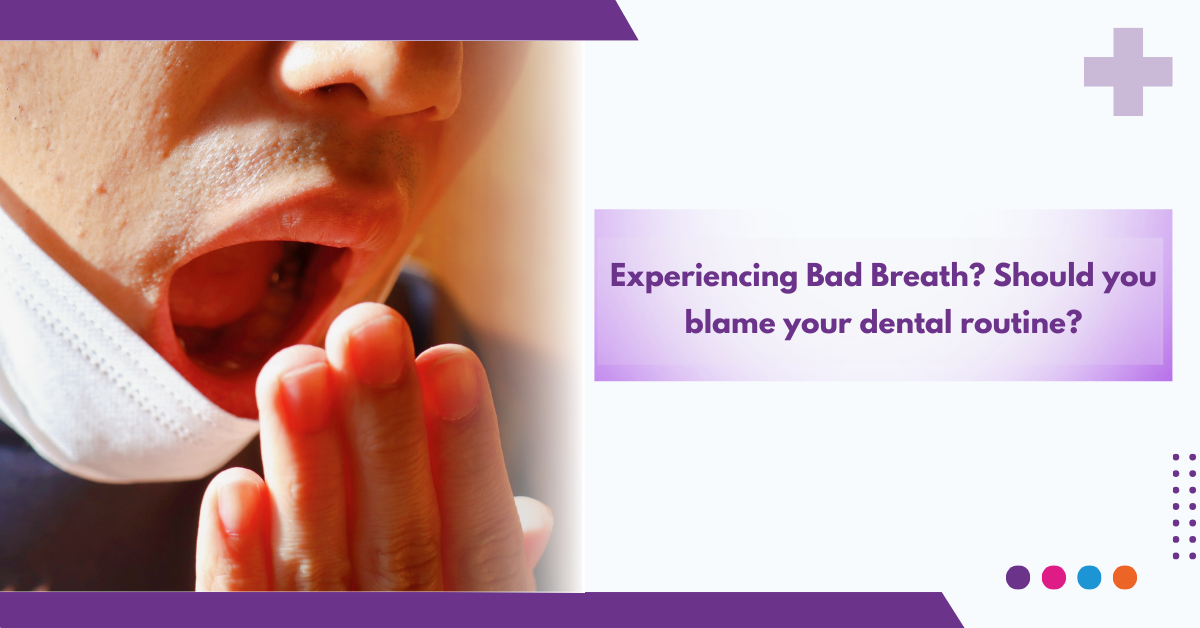
Are you aware that your bad breath could ruin your self confidence? Morning bad breath is totally different from chronic bad breath. Persistent bad breath might impact your social life, make you feel conscious about yourself, even make you feel reluctant to talk to your colleagues, and highly affect your oral hygiene.
It is important to know what causes bad breath, what happens when you ignore oral hygiene, and how to prevent it. In this blog, we will break down everything you need to know about bad breath in detail.
What Happens When You Ignore Your Oral Hygiene?
Do you know that the important factor that leads to bad breath is tiny bacteria? Bad breath is medically known as halitosis. These bacteria settle in your mouth, particularly between your teeth and on your tongue. They will exist on the leftover food components in your mouth, particularly starchy and sugary foods. When these bacteria digest these leftover food particles, they release foul smelling sulfur compounds.
These compounds make your breath smelly. Neglecting oral hygiene results in plaque accumulation, cavities, serious gum diseases, and especially bad breath. This could affect your overall oral health in the long run. Now let’s see what happens when you ignore your oral hygiene.
- Cavities and Tooth Decay: Acids that build up in plaque corrode enamel, leading to holes in the teeth.
- Bad Breath: Leftover food particles in the mouth or bacteria lead to continuous bad smells.
- Tooth Loss And Sensitivity: Tooth loss and tooth decay could occur because of it. This causes discomfort and ultimately results in tooth loss.
- Gum Disease: Initially, swelling and bleeding can gradually advance to periodontitis, which attacks the bone and tissue supporting teeth.
- Infections And Mouth Sores: Poor oral hygiene might result in painful mouth sores and ulcers.
What Is Causing Bad Breath?
If you have bad breath even after brushing, then it is important to know what causes bad breath. Several factors can interrupt your mouth’s natural acidic balance. Here are a few bad breath reasons:
1) Dietary Options: What you eat influences your breath. Certain drinks and foods smell stronger, and the odor will stay in your mouth for several hours. Garlic, onion, coffee, and cheese are some of the bad breath causing foods.
2) Bad Oral Hygiene: If an individual does not floss or brush sufficiently, food components will stay trapped in between the teeth. This may lead to tooth decay, for which you should blame your dental routine. If food particles are trapped for a long time, they might cause stinky bad breath. Visiting Coimbatore’s best dentist for dental cleaning is essential to get rid of bad breath and get guidance on proper oral hygiene.
3) Dry Mouth: Dry mouth occurs for various reasons. Saliva in our mouth helps clean the mouth and remove bacteria and food. Therefore, dry mouth could also result in bad breath. Seeking help from a dentist can help determine the underlying cause.
4) Smoking: Persistent smoking can give people an unpleasant smell in the mouth. Tobacco use and smoking are both bad for oral hygiene in common.
5) Medical Conditions: Mouth infections and other medical conditions, such as chronic tonsillitis, can lead to unpleasant bad breath. Because of these conditions, bacteria will build up in your mouth. It is important that you floss more often if you have these conditions to get rid of the bad breath. Also, if this bad breath is chronic, then it is important to note that you must visit a specialist.
Still, there are many reasons behind bad breath. Frequent dental visits can help determine the underlying cause of an individual’s bad breath. Dentists will help get rid of the plaque accumulation and bad breath causing bacteria. Doing so not only helps reduce bad breath but also improves your overall oral hygiene.
What Are The Ways To Get Rid Of Bad Breath?
Here are the ways to get rid of bad breath:
- Cleaning your tongue with a scraper once a day.
- Brushing your teeth at least two times a day and flossing one time a day is vital.
- Rinse your mouth with antibacterial mouthwash with no alcohol.
- Always wash your oral appliances, such as dentures and retainers, as specified by your dentist.
- Consume sufficient water to never let your mouth dry out.
- Consult a dentist two times a year at least for cleanings and examinations.
- Avoid caffeine, alcohol, and tobacco products that cause further dryness in your mouth.
- Increase the production of saliva by chewing on sugarless gums and candies.
Also, try to avoid foods that lead to bad breath, like garlic and onions, in your diet. Because these compounds might stay in your mouth even after brushing. In case you are worried about your chronic bad breath, visit a dentist at Coimbatore’s best dental hospital for proper evaluation.
How Can Bad Breath Be Prevented?
Treatment for bad breath relies on what is causing it. For instance, if the bad breath is due to plaque accumulation, improved oral hygiene, proper brushing, and a correct dental routine at home are adequate. It is particularly essential to use a tongue scraper, as it helps in getting rid of the hidden food debris and bacteria.
Occasionally, your dentist might suggest special mouth rinses. Certain mouthwashes only cover your bad breath. But it is important to use zero alcohol, bacteria killing mouthwash to remove the bad breath from your mouth completely.
Conclusion
Bad breath that occurs due to poor oral hygiene can be controlled and managed easily. Tongue cleaning and brushing will just not get the job done. Following comprehensive oral hygiene measures, which include flossing, brushing, rinsing, scraping, and visiting a dentist for dental cleaning, is vital to get rid of the bad breath and regain your fresh breath.